

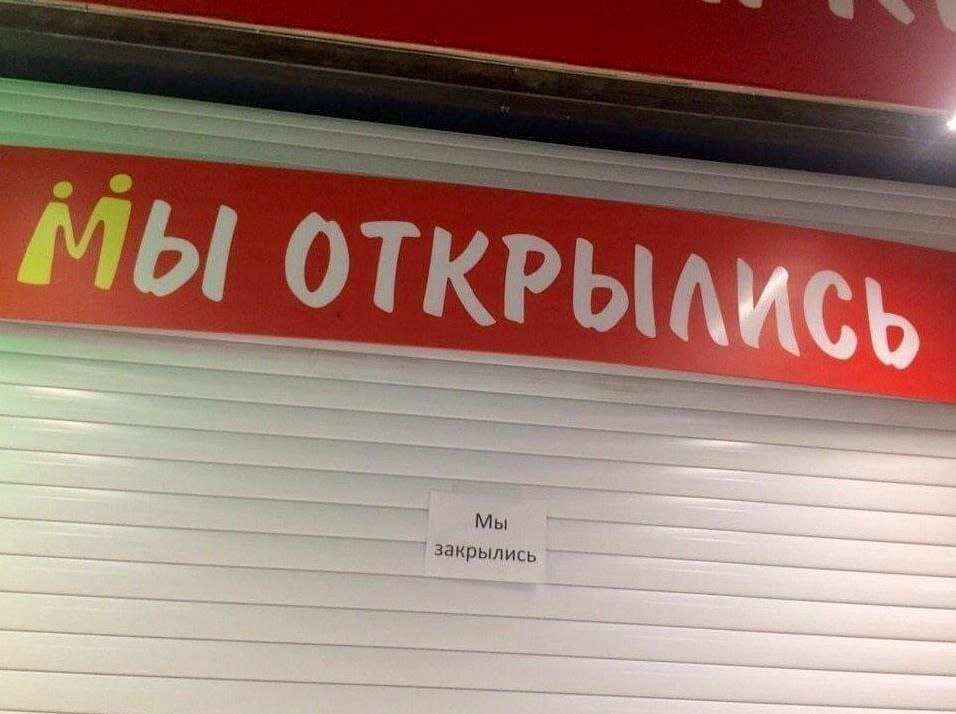
Verbs that relate to oneself are called reflexive verbs, in Russian возвратные глаголы. Reflexive verbs often involve a “self” (or oneself); in Russian, this “self” is represented by the suffix –ся at the end of the verb. For example, мыть means to wash, and мыться means to wash oneself (or yourself).
The sound of я in this context is more like “a” than “ya.” In conjugations, you’ll see both -ся and -сь endings.
Russian Intransitive verbs
These verbs don’t take a direct object. Compare Я открываю дверь (I open the door) with Дверь открывается (the door opens). In the first sentence, открывать is used with the door as the direct object (it’s being opened). In the second sentence, открываться describes the action (opening) affecting the subject itself. This makes the verb intransitive or intransitive.
Conjugations of reflexive verbs
Conjugating verbs ending in -ся is easy. You follow the same rules as for the verb without -ся. Then, you simply add either -ся (after a consonant) or -сь (after a vowel).
Check out Russian verbs. 1st conjugation. Reflexive forms (Maria Zakharova, 2020, 19 mins) and Russian Reflexive Verbs / Russian Lessons Online (russianwithrussian, 2017, 3 mins).
With and Without -ся
Always -ся
Some verbs always end in -ся and don’t have a non-reflexive counterpart. Examples include смеяться (to laugh), улыбаться (to smile), and бояться (to fear).
Vocabulary
Here are 46 Russian reflexive verbs for everyday use (для ежедневного употребления) in the video below (2020, 10 mins).
просыпаться, умываться, готовиться, одеваться, собираться, учиться, спускаться, добираться, улыбаться, подниматься, находиться, приниматься, здароваться, стараться, знакомиться, общаться, видеться, переписываться, созваниваться, увлекаться, смеяться, заниматься, интересоваться, нравиться, слушаться, радоваться, бояться, закупаться, расплачиваться, прибираться, кататься, наслаждаться, прощаться, возвращаться, раздеваться, закрываться, мыться, вытираться, расчёсываться, мазаться, смотреться, валяться, расслабляться, ложиться, вырубаться, оставаться.
From the same channel: Возвратные глаголы / грамматика русского языка (2017, 12 mins).
More Russian reflexive verbs
- Verbs with -СЯ (Part 1) (Russian with Anastasia, 2020, 41 mins), see also Part 2, Part 3, Part 4, and more.
- Reflexive Verbs (Russline, 2020, 4 mins)
- Intermediate Russian: Reflexive Verbs (Amazing Russian, 2018, 16 mins), from the same channel: Passive Constructions with Reflexive Verbs (2020, 11 mins)
- Reflexive verbs (R for Russian, 2018, 18 mins), see also Part 2 (2018, 24 mins)
- How to use reflexive verbs in Russian language (Russian to the World, 2018, 5 mins)
- Reflexive Verbs with -СЯ (Be Fluent in Russian, 2017, 9 mins), from the same channel: Conjugating -СЯ (2017, 12 mins)
- Russian Reflexive Verbs (Antonia Romaker), see also Part 2 and Part 3
- ся / сь: Reflexive Verbs in Russian (Russian with Tatiana, 2016, 9 mins)
- Russian verbs: встречаться, улыбаться, возвращаться, ошибаться, кататься (learnrussian.org, 2016, 9 mins)
Follow Rusland1 on X
Discover more about Russian, Russia and Russians at Rad Russia
Listen to Russian music at Music in Russian
More
Language
Learn Russian With New Channels
Language
Presenting seven new professors at YouTube University
Little Russia (Zemfira Amsterdam)
Language
The totally unprofessional report of Zemfira live in Amsterdam (November 4, 2024)
TO WORK! RUSSIAN VERB VOCABULARY
Language
Reaons and ways to work with the treasure trove of Russian verbs

Learn Russian with News
Language
The good news in all the news

Russian Propositional Case (#6)
Language
When to use the sixth of the six Russian cases

OPERATION WAR
Language
A war that has been going on for two years, and a pause that ends after three. The state of the world, and of this site.
