

In Chess in Russia Is Like Baseball in America (Big Think, 2011, 2 mins), Anatoli Karpov (1951) describes the status and position of chess in Russia. “Chess became a national game,” he says. “Like you have here in America, you have baseball. And so, Russia has chess.”
Chess as a School Subject
In Armenia, children have been learning chess in school since 2011. See The country breeding a generation of chess whizz kids (BBC News, 2018), Armenia: Compulsory Chess (DW News, 2012, 6 m), and Chess in Armenia. In Kalmykia, Kirsan Ilyumzhinov took things even further. Jelle Brandt Corstius showed it in the series Van Moskou tot Magadan; more in Russia Made The King Of Chess. The U.S. Dethroned Him (FiveThirtyEight, 2018).
In Russia, chess has also become a school subject. See Russia Introduces Chess as a Required Subject in all Schools (Chessmaine.net, 2019), Chess to become a compulsory school ‘subject’ in Russian schools (Royanews.tv, 2017), or Russian Senator Wants to Make Chess Mandatory in All High Schools (The Moscow Times, 2016).
Russian Chess Players
Russia has produced many successful chess players and has more grandmasters (male and female) than any other country. Garry Kasparov (1963) is probably the most famous; before him, there was Alexander Alekhine (1892-1946, with an opening) named after him), Mikhail Botvinnik (1911-1995), Viktor Korchnoi (1931-2016; see below), and Boris Spassky (1937), famous for the match against Bobby Fischer in 1972 – which he still remembered at 80.
More current and much younger players include Vladimir Kramnik (1975), Alexander Grischuk (1983), Ian Nepomniachtchi (1990), Sergey Karjakin (1990), Daniil Dubov (1996), and Vladislav Artemiev (1998). Among women, Alexandra Kosteniuk (1984) is the top player, while Aleksandra Goryachkina (1998) could be the future star. The first female world champion, Vera Menchik, was born in Moscow (1906) and represented Russia, but was officially not Russian. See Russian female chess players on Wikipedia.
Chess Promotion and the Chess Museum
In recent years, Russia has been slightly behind in dominating world chess. Norwegian Magnus Carlsen (1990), who was visited by Kasparov at age 13 and defeated Karpov, wins almost everything. See Why is Russia no longer dominating the world chess championships? (StackExchange, 2019) and Return of the Crown: Russia Dreams of Chess (The Moscow Times, 2016).
Still, no Norwegian or any other country can take away Russians’ love for chess – a game, relaxation, science, sport, and art all rolled into one (described beautifully by Mikhail Tal in 1988).
Apart from learning it in schools, Russians play chess in prison (against Americans), while boxing, on giant boards, on ice, in hospitals, and even at the front.
In Russia, there’s Chess City in Elista, Kalmykia, and in Moscow (on Gogolevsky Boulevard), you’ll find The most beautiful chess museum ever (ChessBase India, 2018, 32 m).
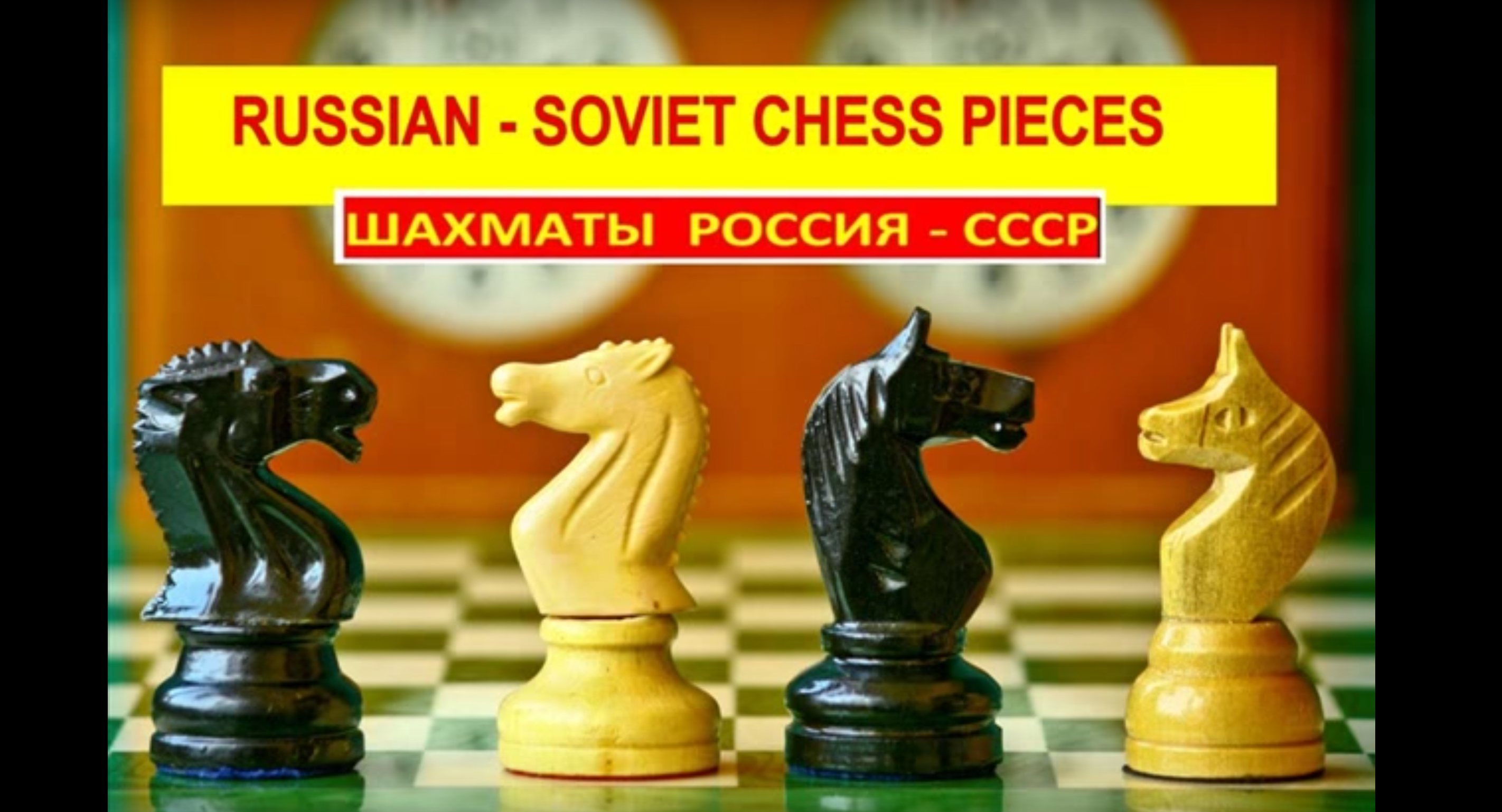
See more impressions: Best Chess Museum @ Russian Chess Federation (Borders on Budget, 2019, 5 m), Chess museum in Moscow (Chess Cast, 2016, 5 m), and RCF Chess Museum (Ruchess.ru). Check out unique chess sets in Chess sets: Russian-Soviet / Шахматные фигуры русско-советской (Arlindo Vieira, 2012, 26 m), and Шахматы СССР – Soviet chess set (chessprofi, 2018, 31 m). For more on Moscow and chess, see Moscow, chess and fun (EuropeEchecs, 2012, 4 m). See also Your move: how chess is promoted in Moscow (Mos.ru, 2020).
Chess Language and Notation
For chess terminology in Russian, check out Russian Chess Vocabulary (Real Russian Club, 2018, 4 m), and Chess Vocabulary in Russian. О шахматах по-русски (Russian Sensei, 2019). For chess notation and abbreviations, see Как записывать шахматные партии (шахматная нотация) (BrainFitness, 2019, 11 m).
Soviet School of Chess
For more on Soviet chess history, see The Soviet School of Chess (Lucas Anderson, 2014, 120 m), and check out USSR vs Rest of World II (1984) (2016, 98 m). The same author has a whole series on chess and chess players, featuring Mikhail Botvinnik (2016, 127 m), Garry Kasparov (2015, 130 m), Mikhail Tal (2014, 117 m), Anatoly Karpov (2014, 101 m), Alexander Alekhine (2014, 110 m), and Boris Spassky (2014, 97 m).
See more on Soviet chess school history: Efim Geller and the Soviet School of Chess (Jessica Fischer, 2010, 8 m) and The Biggest Secret Of The Soviet Chess School (Chess.com, 2015).
Viktor Korchnoi’s Bad Back
Story Time: Russian Chess Assassin – Yasser Seirawan shares about staying at Viktor Korchnoi’s home, who prefers to sleep on the couch (Chessable, 2020, 4 m).
More
- Шахматы в России (Библиотека Ногинская, 2020, 6 m)
- Шахматы в СССР (1988) (Советское телевидение, 2019, 29 m)
- Владимир Путин: шахматы – красивый вид спорта (Россия 24, 2018, 4 m)
- Век шахмат / Власть факта (Телеканал Культура, 2018, 39 m)
- Russia as a Global Chess Player (Russia Today TV, 2017, 13 m)
- Garry Kasparov on Chess and Politics in Soviet Russia (Bill Kristol, 2016, 80 m)
- Путин о шахматах (Chess-News, 2016, 2 m)
- Russian President Vladimir Putin Opens the Chess Section of the Sirius Educational Centre (CFR Chess Federation of Russia, 2016, 2 m)
See/read
- Here’s why chess was so extremely popular in the USSR (Russia Beyond, 2020), and 7 Russian chess legends who really played big (2020)
- A History of Chess in Russia (Chess24.com, 2020)
- 50 Years Ago Today, USSR-Rest Of The World Started (Chess.com, 2020)
- Why Russians Are Good At Chess, And Why It Helps To Know That (Forbes, 2018)
- How chess became a pawn in Russia’s political war games (Wired, 2018)
- How the game of chess became so popular in Russia (Visit Russia Home, 2018)
- How chess stole millions of hearts in Russia (Russia Beyond, 2016)
- Why are the Russians so good at chess? (Slate, 2009)
- Russian Chess History (Chess.com, 2008)
Follow Rusland1 on X
Discover more about Russia and Russians at Rad Russia
Listen to Russian music at Music in Russian
Last updated 05-12-2020
More
Country
A look into the Soviet interior
Looking back at the eventful political career of Butka born Boris Yeltsin

Weed, canals, tulips, and cheese. Everyone’s six feet tall and has a big mouth. Or not?

The interview that will go down in history as a history lecture

GOPNIK AND THE SLAV SQUAT
Country
Never skip Leg Day. Meet the Russian version of white trash.

The Photography of Igor Mukhin
Country
On shooting in times of change, and at exactly the right moment
