

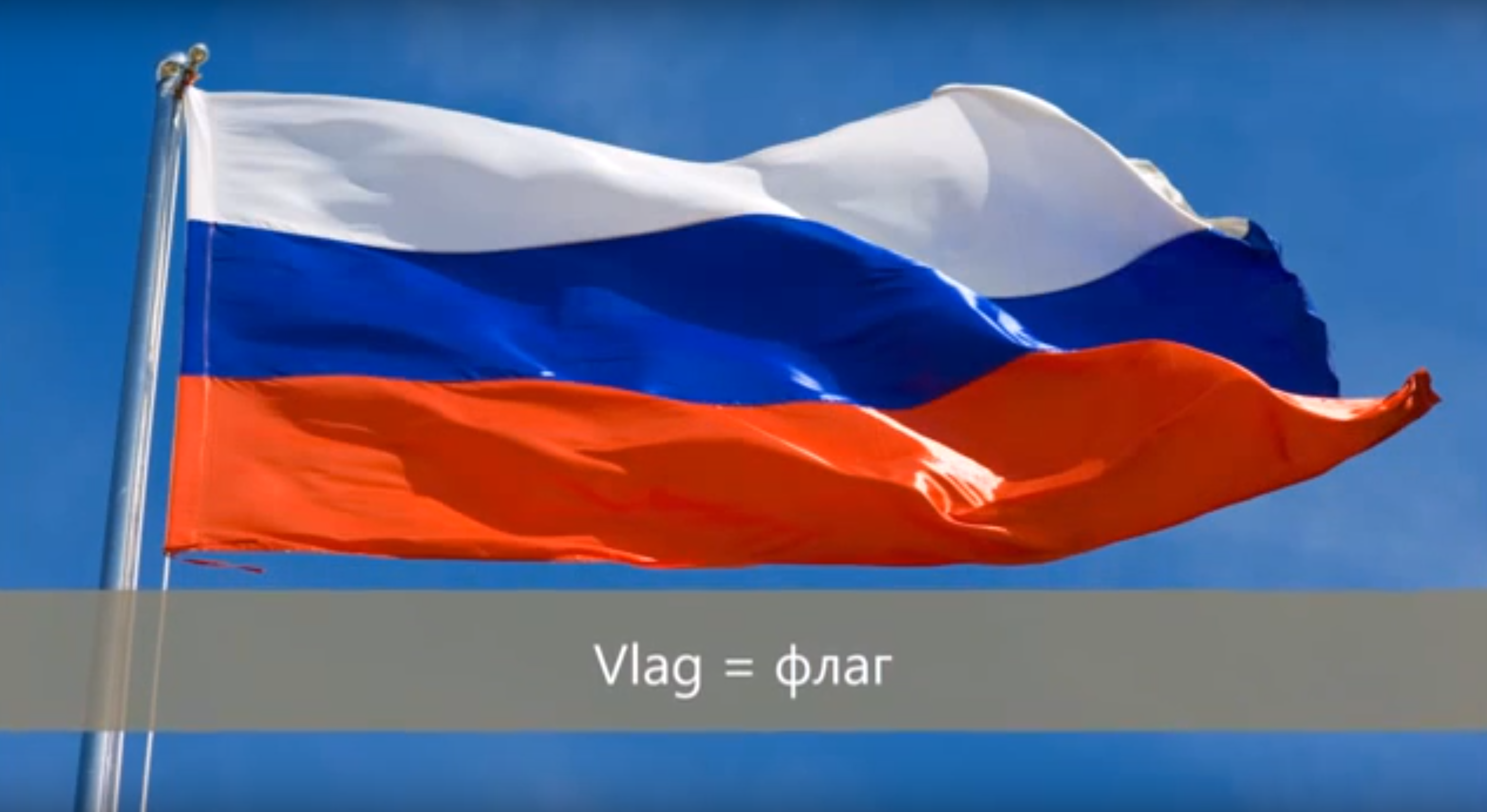
A frequently asked question, which is not so easy to answer. The Russian language has simple as well as complex rules. And what is a piece of cake for one person can be an ordeal for another: one person runs a marathon with ease, while another cannot even cycle a half. ‘How difficult is Russian?’ seems like a difficult question.
The hardest language to learn is probably one you don’t feel much for, while the easiest is the one that attracts you. But those are clichés, and still don’t answer the question. So, how hard is Russian?
Not difficult at all (Russian is easy)
Russian isn’t Chinese. And if over 150 million people (or even 258 million) can speak it, it can’t be that hard. Many Russian words are easy or quickly recognizable. They resemble (or come from) English, German, or even Dutch. Check out (besides the examples below) Любой голландец знает эти 42 русских слова (Every Dutchman knows these 42 Russian words) by Ари говорит по-Русски (2020, 14 mins); also see 10 Russian words that you can easily pronounce (Comrade Helps, 2019, 2 mins).
Also convenient: several letters from the Russian alphabet are just like ours; questions and past tense are often simple; Russian doesn’t have articles, and much more. Russian is easy!
Why Russian is easy
Watch
- Why Russian is easy: no articles (Learn the Russian Language, 2020, 3 mins)
- Чем русский язык впечатляет иностранцев (Ари говорит по-Русски, 2019, 9 mins)
- 10 Reasons Why the Russian Language is Easier Than You Think (MosaLingua, 2017, 2 mins); from the same channel: Why Russian isn’t as Hard as You Think (2019, 7 mins)
Read
- 10 reasons why Russian is easy to learn (Enjoy Russian, 2020)
- 6 Reasons Russian is easier than you think (Liden & Denz, 2019)
- 4 Reasons Why Russian Is Easier Than German, French or Any of The Other Popular Languages (Learn the Russian Language, 2019)
- Russian is way easier than you think! (Russia Beyond, 2019)
- 10 Reasons why Russian Language is not as hard as you think (Babbel Tower, 2018)
- 10 Reasons Why the Russian Language Isn’t That Difficult (Mezzoguild)
- Why Russian is Easier than You Think (Fluent in 3 Months)
Not that easy (Russian is hard)
Now, don’t get overconfident. For every ease in Russian, there’s at least one difficulty. Six cases (actually seven). Each verb has two forms with separate conjugations – and there aren’t just two conjugation patterns, but around forty. Then you have verbs of motion, prefixes, gerunds, and much more. No, Russian isn’t Chinese – Russian is harder! Even Chinese people say so (more comparisons below). If that sounds exaggerated, try the math with RusTongue, who explains (below) how you can form 597 new words from the root слово (word). Russian is Difficult Even for Native Speakers and a Real hell for foreigners.
Bridget Barbara is less absolute and lists (for Russia Beyond) the top 5 struggles in the life of Russian learners (2018, 5 mins). More about this New Yorker (also on Russia Beyond’s channel) in My Life in Russia (2018, 10 mins); also featured (speaking Russian) in An American talks about Russia in Russian (Russian with Anastasia, 2016, 6 mins).
Why Russian is hard
Watch
- Why Russian is so hard? (Slow Russian, 2020, 2 mins)
- Is Russian easy or difficult to learn? How hard is Russian? (5-Minute Language, 2020, 5 mins)
- Чем Русский язык сводит иностранцев с ума? (Ари говорит по-Русски, 2019, 6 mins); from the same channel: Новый взгляд на сложности Русского языка (2019, 3 mins)
- Страдания иностранца: почему русский язык такой сложный? (Skyeng, 2019, 14 mins)
- What Makes Russian Difficult (No, it’s not the alphabet) (Languages with Tom, 2019, 10 mins)
- Ask a Russian Teacher – How Hard Is It to Learn Russian? (RussianPod101, 2018, 3 mins)
- Почему Русский Язык Так Тяжело Иностранцам Учить? Падежи! (Джастин, 2017, 5 mins)
- 3 Reasons why Russian is more Difficult than you Think (Language Boost, 2016, 6 mins)
- How hard is it to learn Russian? (Lifey, 2013, 1 min)
Read
- Do you have what it takes to learn Russian? (Russia Beyond, 2019); also see: Why is the Russian language so difficult? (2017)
- How Hard Is It to learn Russian? (Teacher Finder)
- Is Russian Hard To Learn? A Fair Analysis For Beginners (My Key to Russian)
Classifications and Comparisons
- Russian vs. Chinese – Which one is Harder to Learn? (Jan & Lucas / Language Boost, 2018, 16 m); from the same channel: The Most Difficult Languages of the World (2016, 9 mins)
- Какой самый сложный язык в мире? (Which language is the hardest in the world? По Факту, 2017, 6 mins); related and from the same channel: Какой самый легкий язык в мире? (Which language is the easiest, 2019, 6 mins)
- Самый сложный язык для изучения (The hardest language to learn, DaiFiveTop, 2016, 3 mins)
Always difficult?
Children and polyglots aside, learning a new language is never easy. See: Why It’s So Hard to Learn Another Language After Childhood (Time, 2018), Here’s when it gets more difficult to learn a new language, according to science (Business Insider, 2018), and Why We Struggle Learning Languages (Gabriel Wyner, TEDx Talks, 2017, 16 mins).
Still (or even more so), do it
All the better for the brain: see What Happens To Your Brain When You Learn a New Language (Unbabel, 2019, 2 mins); The Benefits of Learning A New Language (Keep it in mind, 2019, 3 mins), 7 Incredibly Useful Benefits of Learning a New Language (Luca Lampariello, 2018, 7 mins), and The benefits of a bilingual brain (Mia Nacamulli, TED-Ed 2015, 5 mins).
Related: How long does it take to learn Russian?
Follow Rusland1 on X
Discover more about Russian, Russia and Russians at Rad Russia
Listen to Russian music at Music in Russian
More
Language
Learn Russian With New Channels
Language
Presenting seven new professors at YouTube University

Little Russia (Zemfira Amsterdam)
Language
The totally unprofessional report of Zemfira live in Amsterdam (November 4, 2024)

TO WORK! RUSSIAN VERB VOCABULARY
Language
Reaons and ways to work with the treasure trove of Russian verbs

Learn Russian with News
Language
The good news in all the news

Russian Propositional Case (#6)
Language
When to use the sixth of the six Russian cases

OPERATION WAR
Language
A war that has been going on for two years, and a pause that ends after three. The state of the world, and of this site.
